TL;DR
- Translation converts text from one language to another while preserving the original meaning. It is right for legal documents, technical manuals, and compliance copy
- Localization adapts content for a specific market, adjusting currency, cultural references, tone, and format. It goes beyond words to include context
- Transcreation rebuilds creative content from the ground up so it produces the same emotional impact in the target language as the original. The source text is a brief, not a template
- This article dissects the core differences between transcreation vs localization vs translation
- For Saudi Arabia, most consumer-facing brand content needs localization at a minimum and transcreation for anything campaign-driven, emotional, or identity-defining
- Taglime delivers all three services for the Saudi market, with native Saudi writers who have worked on these decisions for brands including Saudia, PIF, NEOM, and Qiddiya since 2017
What Is the Difference Between Translation, Localization, and Transcreation?
Transcreation vs localization vs translation are three distinct language services that serve different purposes. Translation converts text between languages. Localization adapts content to the cultural norms of the target audience. Transcreation creatively adapts content to evoke the original emotional impact.
All three are legitimate services. The problem is that most marketing teams use the wrong one for the job. In Saudi Arabia, that mistake shows up in Arabic copy that is technically correct but culturally flat, campaigns that land in Riyadh sounding like they were built for a different market, and brand voices that feel coherent in English and incoherent in Arabic.
This guide explains each service clearly, tells you when to use which one, and gives you a decision framework built specifically for Saudi marketing teams.
Translation: What It Is and When to Use It
Definition: Translation is the process of converting written content from one language to another while preserving the original meaning as accurately as possible. Translators are bound by the source text, and the final product conveys the same information and ideas as the original.
Translation is the right tool when accuracy is the priority and emotional resonance is not the point. It works for content where the facts need to carry over exactly, and the style is secondary.
Use translation for:
- Legal contracts and compliance documents
- Technical manuals and product specifications
- Financial reports and regulatory filings
- Terms and conditions
- Certified official documents
Do not use translation for:
- Campaign headlines and slogans
- Brand voice copy
- Website hero sections
- Social media content
- Product naming
The Saudi-specific translation trap: Most Arabic translation workflows default to Fus’ha (Modern Standard Arabic) because it is formal, safe, and universally correct. For legal and institutional documents, that is fine. For consumer brand copy, Fus’ha reads as stiff and impersonal to Saudi audiences who communicate in White Dialect, Hijazi, or Najdi registers in their daily digital lives. Accurate translation in the wrong register is still the wrong choice.
Localization: What It Is and When to Use It
Definition: Localization is the broader process of adapting content for a specific market or locale. It includes translating text and modifying elements like date formats, currencies, units, cultural references, imagery, and tone addresses the full content experience, not just the words.
Translation and transcreation are the linguistic elements of localization. But localization also includes visuals, design, and other experience elements.
Think of localization as translation plus context. The words are converted and then adjusted to fit the cultural, commercial, and social reality of the target market.
Use localization for:
- Website copy and product pages
- E-commerce product descriptions
- App interfaces and digital products
- Email campaigns
- Social media content requiring cultural adaptation
- Marketing materials entering a new market
A practical Saudi localization example:
An English e-commerce product page reads: “Get free shipping on orders over $50.”
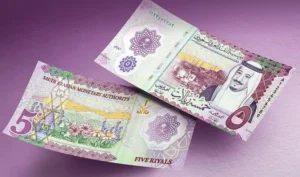
Localized for Saudi Arabia, it becomes: “احصل على شحن مجاني عند الشراء بقيمة 200 ريال سعودي أو أكثر.” Currency is adapted (USD to SAR), pricing logic matches local spending expectations, and the message feels native and trustworthy to the audience.
That is localization. The message is the same. The context is Saudi.
Saudi-specific localization considerations:
Beyond language, Saudi localization requires attention to the following:
- Date and calendar formats. The Hijri calendar is still used alongside the Gregorian in official and religious contexts. Ramadan, Founding Day, and National Day need separate content strategies, not generic templates
- Imagery and representation. Visual choices that are neutral in Western markets can carry strong cultural signals in Saudi Arabia. Localization includes visual review
- Payment and commerce references. Mada, STC Pay, and Apple Pay are the dominant payment methods. References to Visa and Mastercard alone signal that a brand has not thought carefully about the Saudi consumer journey
- Direction and layout. Arabic reads right to left. Localized digital content requires RTL layout, not just translated copy pasted into an LTR design
Transcreation: What It Is and When to Use It
Definition: Transcreation is the process of recreating content in a new language and culture so that it produces the same emotional response as the original. Transcreators are not bound by the source text, though they may use it as a reference. The result is new content completely tailored for the new audience.
Transcreation projects start with a creative brief, not with translating the source text. Copywriters craft the new message rather than translators adapting tone or style. In the end, the creative concept is recreated for the new target market. The words, the tone, and the visuals might be very different from the source content.
The clearest way to understand transcreation: the source text is not the deliverable, it is the brief.
Use transcreation for:
- Campaign headlines and taglines
- Brand slogans and straplines
- Product and project naming
- Advertising copy
- Brand identity copy and manifesto language
- Hero website copy where emotion drives conversion
- Any content where a literal translation would be confusing, offensive, or flat
A well-known global transcreation example:
The “Got Milk?” campaign could not be translated directly for the Latino market. The literal Spanish translation asked, “Are you lactating?” The transcreated solution, “Familia, Amor y Leche” (Family, Love and Milk), rebuilt the emotional message around the cultural values of the target audience rather than the words of the original.
A Saudi-specific transcreation example:
Black Friday becomes White Friday in the MENA because Friday holds strong religious significance in Islamic culture. The color black carries different associations. The transcreated name preserves the commercial intent of the original while replacing the culturally problematic element entirely.
In Saudi Arabia, transcreation also operates at the dialect level. A campaign headline that works in White Dialect for a digital-native Saudi audience will not work if the same emotional beats are rebuilt in Fus’ha. The creative reconstruction has to happen in the right register, not just in Arabic.
Side-by-Side Comparison: Translation vs. Localization vs. Transcreation
| Translation | Localization | Transcreation | |
| What it does | Converts text between languages | Adapts content for a specific market | Rebuilds content to produce the same emotional impact |
| Starting point | Source text | Source text plus cultural context | Creative brief |
| Bound by source text? | Yes | Mostly | No |
| Output | Equivalent meaning | Culturally adapted content | New content for a new audience |
| Best for | Legal, technical, compliance | Website, product, digital content | Campaigns, slogans, naming, brand voice |
| Who does it | Translator | Localization specialist | Copywriter plus cultural expert |
| Creative latitude | Low | Medium | High |
| Cost | Lower | Medium | Higher |
| Right for the Saudi consumer brand work? | Rarely | Often | Always for campaign-critical content |
Which One Do You Actually Need for Saudi Arabia? – Transcreation vs Localization vs Translation
This is the question most marketing teams get wrong. They default to translation because it is cheaper and faster. Then they wonder why the Arabic content is not working.
Here is a simple decision framework:
Ask: What is the primary purpose of this content?
If the answer is to inform accurately (contracts, manuals, reports), use translation.
If the answer is to help Saudi audiences understand, navigate, or use something (website pages, app copy, product descriptions, emails), use localization.
If the answer is to make Saudi audiences feel something and act on it (campaigns, launches, brand narratives, naming), use transcreation.
Ask: What happens if a Saudi reader finds the Arabic slightly off?
For a technical manual, slightly off phrasing is a minor problem. For a campaign headline, it signals that the brand does not understand them. For a product name, it can make a brand permanently untrustworthy in the market.
The higher the emotional and brand stakes, the more you need transcreation.
The Saudi market reality: Most international brands entering Saudi Arabia need all three, applied to different content layers. Technical documentation needs translation. Website and digital product copy need localization. Campaign-level content, naming, and brand voice work needs transcreation.
The mistake is applying translation to everything because it is the service people know how to brief and buy.
What This Looks Like in Practice: A Saudi Campaign Scenario
Say an international retail brand is launching in Saudi Arabia. Here is how the three services map to their content needs:
- Translation: Privacy policy, terms and conditions, supplier contracts, employee documentation, regulatory filings
- Localization: Website product pages, size guides, checkout flow, email newsletters, app interface copy, FAQs, customer service templates, social media captions
- Transcreation: Campaign headline, launch tagline, brand manifesto, product naming (where applicable), hero website copy, advertising scripts, Ramadan campaign language, Founding Day activation copy
None of these layers can substitute for the others. A brand that translates its launch campaign will produce something flat. A brand that transcreates its terms and conditions will produce something expensive and unnecessary. The skill is knowing which layer each piece of content belongs to.
The Saudi Dialect Layer That Cuts Across All Three
Here is something most guides on transcreation vs localization vs translation do not address: in Saudi Arabia, dialect choice operates as a fourth dimension across all three services.
Translation in Fus’ha versus White Dialect produces different results for different contexts. Localization that adapts currency and calendar but misses the register decision has addressed the surface layer and missed the deeper one. Transcreation built in Najdi Arabic for a Jeddah-facing consumer brand is using the wrong creative foundation.
Saudi Arabia has four main Arabic registers that brands need to navigate: Najdi (central Saudi, authoritative, national), Hijazi (western Saudi, warm, cosmopolitan), White Dialect (the modern digital-native register for young Saudi audiences), and Fus’ha (formal, institutional, written). Each register is right for specific contexts and wrong for others.
For more on this, Taglime’s guide to Saudi Arabic dialects covers the dialect decision in detail.
The Right Service for the Right Content
Taglime delivers translation, localization, and transcreation for the Saudi market, with native Saudi writers who have been navigating these decisions across 6,500+ projects since 2017.
If you are not sure which service your next brief needs, that conversation is a good place to start.
Talk to Taglime at [email protected], and get the best Transcreation vs Localization vs Translation framework and services.
Frequently Asked Questions (FAQs)
What is the simplest difference between translation, localization, and transcreation?
Translation converts words. Localization adapts content for a specific cultural and commercial context. Transcreation rebuilds creative content from a brief to produce the same emotional impact in the target language. For Saudi brand work, most consumer-facing content needs at least localization, and campaign-critical content needs transcreation.
Is transcreation more expensive than translation?
Yes. The extra creativity required makes transcreation a more premium service. Translation is generally more affordable, and machine translation is cheaper still. Transcreation is priced like copywriting, not translation, because it is copywriting. The brief goes to a writer, not a translator.
When should a Saudi brand use transcreation instead of localization?
When the content’s primary job is to make an audience feel something, and when a literal adaptation would lose the emotional effect. Campaign headlines, brand slogans, product names, launch copy, and Ramadan or National Day activations almost always need transcreation in Saudi Arabia. Localization handles the functional content layer; transcreation handles the emotional one.
Can AI handle translation, localization, or transcreation for the Saudi market?
AI tools handle straightforward translation with reasonable accuracy for high-volume, low-stakes content. Localization requires cultural judgment that AI currently lacks for the Saudi-specific context. Transcreation requires creative reconstruction, which is a copywriting task, not a language task. AI-generated transcreation for Saudi Arabic consistently defaults to Fus’ha and flattens the cultural register that Saudi audiences are sensitive to.
What is the difference between localization and transcreation in Arabic specifically?
In Arabic localization, the source content is adapted to fit the Saudi market while keeping the original structure and most of the original language choices. In Arabic transcreation, the source content is used as a creative brief, and the Arabic output may look completely different. The test is whether the Arabic reads like it was conceived for Saudi audiences or adapted for them. Conceived is always stronger.
About Laila Essa
With expertise in strategic communication, Saudi localization, and culturally intelligent copywriting, Laila Essa is the driving force behind Taglime’s voice and vision. Since 2017, she has helped shape how leading brands, government entities, and transformative projects communicate within Saudi Arabia, building narratives that feel human, locally rooted, and connective.
From luxury destinations and tourism initiatives to corporate positioning and large-scale national campaigns, her work consistently challenges generic regional communication in favor of messaging that feels intentional, intelligent, and unmistakably Saudi. Through Taglime, she continues to redefine the role of copywriting in the region, changing it from a content function into a strategic tool for trust, perception, and meaningful human connection.
Looking for a copywriting agency Riyadh brands actually trust? Let us show you the difference between translated communication and Saudi-native communication.
If you have read this far, you understand what Taglime is better than any brochure could explain.
We would love to write for your next.
Reach us at [email protected] or visit taglimeagency.com